Deer Ticks in a Bergen County Yard: Where They Fit in Plant Health Care
Tick control isn't a separate errand, it's part of the same visit that keeps your trees and shrubs healthy.
September 23, 2026 · 4 min read
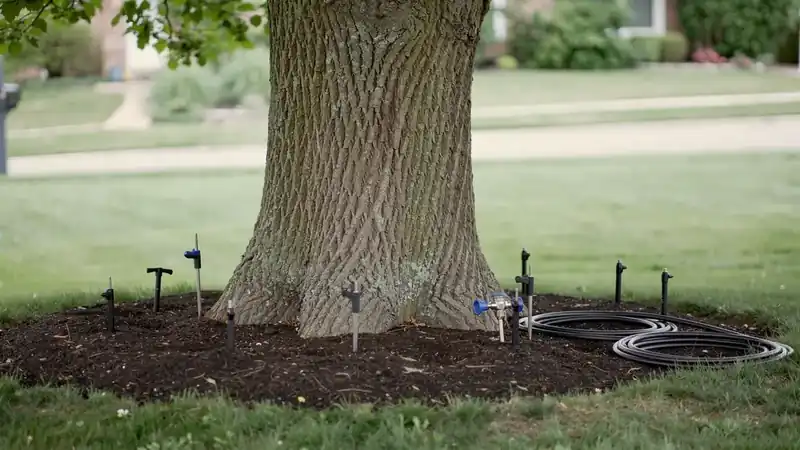
Northern Bergen County yards with mature trees, shrub borders, and a strip of woods at the back property line are close to ideal habitat for deer ticks. That's not a knock on anyone's yard, it's just what shade, moisture, and leaf cover naturally provide. It's the same reason these yards tend to have more birds, more shade, and more established plantings than a newer development with young trees and open lawn, all of that maturity comes with tradeoffs. Tick control is one piece of the plant health care work we do, and it fits alongside the tree and shrub care most of these yards already need.
Where Ticks Actually Set Up in a Yard
Deer ticks don't spend their time out in open, sunny lawn. They stay low in leaf litter, dense groundcover, and the shaded edge where a mowed lawn meets a shrub line, a stone wall, or the woods behind a property. Overgrown shrub borders and thick beds of fallen leaves hold the shade and moisture ticks need to survive between meals. A yard with mature plantings and a wooded edge, which describes a lot of Northern Bergen County properties, gives them exactly that kind of cover close to where people and pets actually spend time.
Why This Sits Inside Plant Health Care, Not Separate From It
A plant health care visit already has a trained set of eyes walking the property, looking closely at trees and shrubs for insects, disease, and general condition. Tick control layers naturally into that same visit rather than requiring a separate service and a separate trip. It's part of the same plant health care program alongside fertilization, insect and disease control, and soil and root care, so the shrub borders and planting beds that give ticks cover get attention at the same time the trees do. It also means the tick treatment isn't guesswork, it's informed by what the same visit already found about the shrub borders and planting beds on that particular property, rather than a blanket treatment applied the same way everywhere.
What a Plant Health Care Visit Covers
- Fertilization and soil and root care for trees and shrubs
- Insect and disease control, including horticultural oil sprays
- Deep root feeding for established trees
- Birch, azalea, and crabapple treatments for species prone to specific problems
- Deer tick control as part of the same program
Common Spots to Watch For on a Property
On a typical Northern Bergen County lot, the trouble spots tend to be the same ones: along a stone wall bordering the woods, under mature shade trees where fallen leaves collect faster than they get raked, and around foundation shrubs that have grown thick enough to block light and air from reaching the ground underneath. None of these are unusual features of a yard, they're just the parts of a property that naturally hold onto shade and moisture the longest, which is exactly what makes them worth a closer look during a plant health care visit.
Well Kept Plantings Give Ticks Less to Work With
Dense, overgrown shrub beds and a heavy layer of leaf litter are what ticks rely on for shade and humidity through the day. Plantings that are pruned to let light and air through, and beds that get cleared rather than left to build up leaf litter year after year, simply offer less of that cover. Pairing that kind of upkeep with tick treatment as part of a plant health care visit addresses both sides of it: the habitat and the ticks living in it. Thinning an overgrown shrub border, clearing leaf litter out from underneath foundation plantings, and keeping the lawn edge mowed back from the woods line all work in the same direction, less deep shade and standing moisture at ground level for ticks to rely on.
Getting the Timing Right Across the Year
Plant health care isn't a single visit and done. Deep root feeding, insect and disease checks, and tick treatment all land at different points across the growing season depending on what the trees and shrubs need at that time of year. Derek, ISA Certified Arborist #1040A, plans out a property's plant health care visits with that full calendar in mind rather than treating each one as a one off. Skipping a season, or treating only once and assuming that covers the yard for the year, tends to leave gaps right when ticks are most active, which is why we plan it as an ongoing program rather than a single visit.
If you want your trees and shrubs on a plant health care program, tick control included, call Live Oak Tree Service at (201) 337-3616 or visit our plant health care page. If you're also planning new plantings for the yard, our tree and shrub planting page covers how we approach that too.
Live Oak Tree Service, (201) 337-3616
Call (201) 337-3616More articles
Why We Never Use Spurs to Prune a Tree We're Keeping
Spurs have a real place in this trade, and it isn't on a tree that's staying in the ground.
A Tree Just Came Down in the Storm: What to Do First
The moments right after a tree comes down matter more than most homeowners expect.